Legal information retrieval is the science of information retrieval applied to legal text, including legislation, case law, and scholarly works. Accurate legal information retrieval is important to provide access to the law to laymen and legal professionals. Its importance has increased because of the vast and quickly increasing amount of legal documents available through electronic means. Legal information retrieval is a part of the growing field of legal informatics. In a legal setting, it is frequently important to retrieve all information related to a specific query. However, commonly used boolean search methods (exact matches of specified terms) on full text legal documents have been shown to have an average recall rate as low as 20 percent, meaning that only 1 in 5 relevant documents are actually retrieved. In that case, researchers believed that they had retrieved over 75% of relevant documents. This may result in failing to retrieve important or precedential cases. In some jurisdictions this may be especially problematic, as legal professionals are ethically obligated to be reasonably informed as to relevant legal documents. Legal Information Retrieval attempts to increase the effectiveness of legal searches by increasing the number of relevant documents (providing a high recall rate) and reducing the number of irrelevant documents (a high precision rate). This is a difficult task, as the legal field is prone to jargon, polysemes (words that have different meanings when used in a legal context), and constant change. Techniques used to achieve these goals generally fall into three categories: boolean retrieval, manual classification of legal text, and natural language processing of legal text. == Problems == Application of standard information retrieval techniques to legal text can be more difficult than application in other subjects. One key problem is that the law rarely has an inherent taxonomy. Instead, the law is generally filled with open-ended terms, which may change over time. This can be especially true in common law countries, where each decided case can subtly change the meaning of a certain word or phrase. Legal information systems must also be programmed to deal with law-specific words and phrases. Though this is less problematic in the context of words which exist solely in law, legal texts also frequently use polysemes, words may have different meanings when used in a legal or common-speech manner, potentially both within the same document. The legal meanings may be dependent on the area of law in which it is applied. For example, in the context of European Union legislation, the term "worker" has four different meanings: Any worker as defined in Article 3(a) of Directive 89/391/EEC who habitually uses display screen equipment as a significant part of his normal work. Any person employed by an employer, including trainees and apprentices but excluding domestic servants; Any person carrying out an occupation on board a vessel, including trainees and apprentices, but excluding port pilots and shore personnel carrying out work on board a vessel at the quayside; Any person who, in the Member State concerned, is protected as an employee under national employment law and in accordance with national practice; It also has the common meaning: A person who works at a specific occupation. Though the terms may be similar, correct information retrieval must differentiate between the intended use and irrelevant uses in order to return the correct results. Even if a system overcomes the language problems inherent in law, it must still determine the relevancy of each result. In the context of judicial decisions, this requires determining the precedential value of the case. Case decisions from senior or superior courts may be more relevant than those from lower courts, even where the lower court's decision contains more discussion of the relevant facts. The opposite may be true, however, if the senior court has only a minor discussion of the topic (for example, if it is a secondary consideration in the case). An information retrieval system must also be aware of the authority of the jurisdiction. A case from a binding authority is most likely of more value than one from a non-binding authority. Additionally, the intentions of the user may determine which cases they find valuable. For instance, where a legal professional is attempting to argue a specific interpretation of law, he might find a minor court's decision which supports his position more valuable than a senior courts position which does not. He may also value similar positions from different areas of law, different jurisdictions, or dissenting opinions. Overcoming these problems can be made more difficult because of the large number of cases available. The number of legal cases available via electronic means is constantly increasing (in 2003, US appellate courts handed down approximately 500 new cases per day), meaning that an accurate legal information retrieval system must incorporate methods of both sorting past data and managing new data. == Techniques == === Boolean searches === Boolean searches, where a user may specify terms such as use of specific words or judgments by a specific court, are the most common type of search available via legal information retrieval systems. They are widely implemented but overcome few of the problems discussed above. The recall and precision rates of these searches vary depending on the implementation and searches analyzed. One study found a basic boolean search's recall rate to be roughly 20%, and its precision rate to be roughly 79%. Another study implemented a generic search (that is, not designed for legal uses) and found a recall rate of 56% and a precision rate of 72% among legal professionals. Both numbers increased when searches were run by non-legal professionals, to a 68% recall rate and 77% precision rate. This is likely explained because of the use of complex legal terms by the legal professionals. === Manual classification === In order to overcome the limits of basic boolean searches, information systems have attempted to classify case laws and statutes into more computer friendly structures. Usually, this results in the creation of an ontology to classify the texts, based on the way a legal professional might think about them. These attempt to link texts on the basis of their type, their value, and/or their topic areas. Most major legal search providers now implement some sort of classification search, such as Westlaw's “Natural Language” or LexisNexis' Headnote searches. Additionally, both of these services allow browsing of their classifications, via Westlaw's West Key Numbers or Lexis' Headnotes. Though these two search algorithms are proprietary and secret, it is known that they employ manual classification of text (though this may be computer-assisted). These systems can help overcome the majority of problems inherent in legal information retrieval systems, in that manual classification has the greatest chances of identifying landmark cases and understanding the issues that arise in the text. In one study, ontological searching resulted in a precision rate of 82% and a recall rate of 97% among legal professionals. The legal texts included, however, were carefully controlled to just a few areas of law in a specific jurisdiction. The major drawback to this approach is the requirement of using highly skilled legal professionals and large amounts of time to classify texts. As the amount of text available continues to increase, some have stated their belief that manual classification is unsustainable. === Natural language processing === In order to reduce the reliance on legal professionals and the amount of time needed, efforts have been made to create a system to automatically classify legal text and queries. Adequate translation of both would allow accurate information retrieval without the high cost of human classification. These automatic systems generally employ Natural Language Processing (NLP) techniques that are adapted to the legal domain, and also require the creation of a legal ontology. Though multiple systems have been postulated, few have reported results. One system, “SMILE,” which attempted to automatically extract classifications from case texts, resulted in an f-measure (which is a calculation of both recall rate and precision) of under 0.3 (compared to perfect f-measure of 1.0). This is probably much lower than an acceptable rate for general usage. Despite the limited results, many theorists predict that the evolution of such systems will eventually replace manual classification systems. === Citation-Based ranking === In the mid-90s the Room 5 case law retrieval project used citation mining for summaries and ranked its search results based on citation type and count. This slightly pre-dated the PageRank algorithm at Stanford which was also a citation-based ranking. Ranking of results was based
PlantUML
PlantUML is an open-source tool allowing users to create diagrams from a plain text language. Besides various UML diagrams, PlantUML has support for various other software development related formats (such as Archimate, Block diagram, BPMN, C4, Computer network diagram, ERD, Gantt chart, Mind map, and WBD), as well as visualisation of JSON and YAML files. The language of PlantUML is an example of a domain-specific language. Besides its own DSL, PlantUML also understands AsciiMath, Creole, DOT, and LaTeX. It uses Graphviz software to lay out its diagrams and Tikz for LaTeX support. Images can be output as PNG, SVG, LaTeX and even ASCII art. PlantUML has also been used to allow blind people to design and read UML diagrams. == Applications that use PlantUML == There are various extensions or add-ons that incorporate PlantUML. Atom has a community maintained PlantUML syntax highlighter and viewer. Confluence wiki has a PlantUML plug-in for Confluence Server, which renders diagrams on-the-fly during a page reload. There is an additional PlantUML plug-in for Confluence Cloud. Doxygen integrates diagrams for which sources are provided after the startuml command. Eclipse has a PlantUML plug-in. Google Docs has an add-on called PlantUML Gizmo that works with the PlantUML.com server. IntelliJ IDEA can create and display diagrams embedded into Markdown (built-in) or in standalone files (using a plugin). LaTeX using the Tikz package has limited support for PlantUML. LibreOffice has Libo_PlantUML extension to use PlantUML diagrams. MediaWiki has a PlantUML plug-in which renders diagrams in pages as SVG or PNG. Microsoft Word can use PlantUML diagrams via a Word Template Add-in. There is an additional Visual Studio Tools for Office add-in called PlantUML Gizmo that works in a similar fashion. NetBeans has a PlantUML plug-in. Notepad++ has a PlantUML plug-in. Obsidian has a PlantUML plug-in. Org-mode has a PlantUML org-babel support. Rider has a PlantUML plug-in. Sublime Text has a PlantUML package called PlantUmlDiagrams for Sublime Text 2 and 3. Visual Studio Code has various PlantUML extensions on its marketplace, most popular being PlantUML by jebbs. Vnote open source notetaking markdown application has built in PlantUML support. Xcode has a community maintained Source Editor Extension to generate and view PlantUML class diagrams from Swift source code. == Text format to communicate UML at source code level == PlantUML uses well-formed and human-readable code to render the diagrams. There are other text formats for UML modelling, but PlantUML supports many diagram types, and does not need an explicit layout, though it is possible to tweak the diagrams if necessary. +--------------------------------------+ | TEDx Talks Recommendation | | System | +--------------------------------------+ | +----------------------------------+ | | | Visitor | | | +----------------------------------+ | | | + View Recommended Talks | | | | + Search Talks | | | +----------------------------------+ | +--------------------------------------+ | | V +--------------------------------------+ | Authenticated User | +--------------------------------------+ | +----------------------------------+ | | | User | | | +----------------------------------+ | | | + View Recommended Talks | | | | + Search Talks | | | | + Save Favorite Talks | | | +----------------------------------+ | +--------------------------------------+ | | V +--------------------------------------+ | Admin | +--------------------------------------+ | +----------------------------------+ | | | Admin | | | +----------------------------------+ | | | + CRUD Talks | | | | + Manage Users | | | +----------------------------------+ | +--------------------------------------+
Data preservation
Data preservation is the act of conserving and maintaining both the safety and integrity of data. Preservation is done through formal activities that are governed by policies, regulations and strategies directed towards protecting and prolonging the existence and authenticity of data and its metadata. Data can be described as the elements or units in which knowledge and information is created, and metadata are the summarizing subsets of the elements of data; or the data about the data. The main goal of data preservation is to protect data from being lost or destroyed and to contribute to the reuse and progression of the data. == History == Most historical data collected over time has been lost or destroyed. War and natural disasters combined with the lack of materials and necessary practices to preserve and protect data has caused this. Usually, only the most important data sets were saved, such as government records and statistics, legal contracts and economic transactions. Scientific research and doctoral theses data have mostly been destroyed from improper storage and lack of data preservation awareness and execution. Over time, data preservation has evolved and has generated importance and awareness. We now have many different ways to preserve data and many different important organizations involved in doing so. The first digital data preservation storage solutions appeared in the 1950s, which were usually flat or hierarchically structured. While there were still issues with these solutions, it made storing data much cheaper, and more easily accessible. In the 1970s relational databases as well as spreadsheets appeared. Relational data bases structure data into tables using structured query languages which made them more efficient than the preceding storage solutions, and spreadsheets hold high volumes of numeric data which can be applied to these relational databases to produce derivative data. More recently, non-relational (non-structured query language) databases have appeared as complements to relational databases which hold high volumes of unstructured or semi-structured data. == Importance == The scope of data preservation is vast. Everything from governmental to business records to art essentially can be represented as data, and is amenable to be lost. This then leads to loss of human history, for perpetuity. Data can be lost on a small or independent scale whether it's personal data loss, or data loss within businesses and organizations, as well as on a larger or national or global scale which can negatively and potentially permanently affect things such as environmental protection, medical research, homeland security, public health and safety, economic development and culture. The mechanisms of data loss are also as many as they are varied, spanning from disaster, wars, data breaches, negligence, all the way through simple forgetting to natural decay. Ways in which data collections can be used when preserved and stored properly can be seen through the U.S. Geological Survey, which stores data collections on natural hazards, natural resources, and landscapes. The data collected by the Survey is used by federal and state land management agencies towards land use planning and management, and continually needs access to historical reference data. == Related Concepts == In contrast, data holdings are collections of gathered data that are informally kept, and not necessarily prepared for long-term preservation. For example, a collection or back-up of personal files. Data holdings are generally the storage methods used in the past when data has been lost due to environmental and other historical disasters. Furthermore, data retention differs from data preservation in the sense that by definition, to retain an object (data) is to hold or keep possession or use of the object. To preserve an object is to protect, maintain and keep up for future use. Retention policies often circle around when data should be deleted on purpose as well, and held from public access, while preservation prioritizes permanence and more widely shared access. Thus, data preservation exceeds the concept of having or possessing data or back up copies of data. Data preservation ensures reliable access to data by including back-up and recovery mechanisms that precede the event of a disaster or technological change. == Methods == === Digital === Digital preservation, is similar to data preservation, but is mainly concerned with technological threats, and solely digital data. Essentially digital data is a set of formal activities to enable ongoing or persistent use and access of digital data exceeding the occurrence of technological malfunction or change. Digital preservation is aware of the inevitable change in technology and protocols, and prepares for data that will need to be accessible across new types of technologies and platforms while the integrity of the data and metadata are being conserved. Technology, while providing great process in conserving data that may not have been possible in the past, is also changing at such a quick rate that digital data may not be accessible anymore due to the format being incompatible with new software. Without the use of data preservation much of our existing digital data is at risk. The majority of methods used towards data preservation today are digital methods, which are so far the most effective methods that exist. === Archives === Archives are a collection of historical documents and records. Archives contribute and work towards the preservation of data by collecting data that is well organized, while providing the appropriate metadata to confirm it. An example of an important data archive is The LONI Image Data Archive, which is an archive that collects data regarding clinical trials and clinical research studies. === Catalogues, directories and portals === Catalogues, directories and portals are consolidated resources which are kept by individual institutions, and are associated with data archives and holdings. In other words, the data is not presented on the site, but instead might act as metadata and aggregators, and may administer thorough inventories. === Repositories === Repositories are places where data archives and holdings can be accessed and stored. The goal of repositories is to make sure that all requirements and protocols of archives and holdings are being met, and data is being certified to ensure data integrity and user trust. Single-site Repositories A repository that holds all data sets on a single site. An example of a major single-site repository the Data Archiving and Networking Services which is a repository which provides ongoing access to digital research resources for the Netherlands. Multi-Site Repositories A repository that hosts data set on multiple institutional sites. An example of a well known multi-site repository is OpenAIRE which is a repository that hosts research data and publications collaborating all of the EU countries and more. OpenAIRE promotes open scholarship and seeks to improves discover-ability and re-usability of data. Trusted Digital Repository A repository that seeks to provide reliable, trusted access over a long period of time. The repository can be single or multi-sited but must cooperate with the Reference Model for an Open Archival Information System, as well as adhere to a set of rules or attributes that contribute to its trust such as having persistent financial responsibility, organizational buoyancy, administrative responsibility security and safety. An example of a trusted digital repository is The Digital Repository of Ireland (DRI) which is a multi-site repository that hosts Ireland's humanity and social science data sets. === Cyber Infrastructures === Cyber infrastructures which consists of archive collections which are made available through the system of hardware, technologies, software, policies, services and tools. Cyber infrastructures are geared towards the sharing of data supporting peer-to-peer collaborations and a cultural community. An example of a major cyber-infrastructure is The Canadian Geo-spatial Data Infrastructure which provides access to spatial data in Canada.
Secret London
Secret London is a Facebook group started by 21-year-old Bristol University graduate, Tiffany Philippou, on 19 January 2010 in response to a Saatchi & Saatchi competition. The group grew rapidly (180,000 members as of 8 February 2010) and is composed mostly of Londoners who use the site to share suggestions and photos of London. After the group's early success, the founder announced her intention to launch a website of the same name by crowdsourcing the design and development. The website was launched on 16 February 2010. == Other secret cities == Following the initial success of Secret London, a number of other secret groups were independently started around the world, some of which already have over 100,000 users. As of 19 February 2010, the list of other groups includes: Secret Frankfurt, Secret Tel Aviv, Secret Paris, Secret New York, Secret Tokyo, Secret Toronto, Secret Los Angeles, Secret Exeter, Secret Boston, Secret Norwich, Secret Singapore, Secret Brighton, Secret Minneapolis, Secret Sydney, Secret Canberra, Secret Brisbane, Secret Wellington, Secret Christchurch, Secret Madeira, Secret Funchal, Secret Bristol and Secret Cardiff. == Controversy == Some commentators have questioned whether it possible to share secrets without compromising them, and whether sharing tips publicly will lead to over-exposure of the businesses who are recommended.
Storyful
Storyful (stylized as storyful.) is a social media intelligence company headquartered in Dublin, Ireland that is a subsidiary of News Corp, offering services such as social news monitoring, video licensing, and reputation risk management tools for corporate clients. The startup was launched as the first social media newswire, a content aggregator, verifying news sources and online content in Dublin in 2010 by Mark Little, a former journalist with RTÉ News. Storyful was acquired by News Corp in 2013 for USD$25 million. == Background == Mark Little, who had worked as a television journalist for RTÉ One, founded startup Storyful in Dublin, Ireland, in 2010, as a service that "verified news sources and online content". According to Nieman Lab, Storyful had a reputation for content aggregation as a social news agency—finding, verifying, distributing, licensing, and commercializing user-generated content, social media and online content from social networking services, including videos about stories in the news, such as the Syrian Civil War, Arab Spring protests, as well as "smaller viral moments". Storyful aimed to provide authority through its verification and monitoring tools while providing authenticity through user-generated content. On 20 December 2013 News Corp purchased Storyful for US$25 million and opened a New York office in the same building as Fox News' main studios. Little left Storyful in 2015 and Gavin Sheridan, Storyful's director of innovation left in 2014. News Corp CEO Robert Thomson said that through Storyful, News Corp would "define the opportunities that the digital landscape presents, rather than simply adapt to them." After the acquisition, the company expanded its service to include "commercial and creative work". After Murdoch acquired the company, from 2014 through to February 2018, losses "swelled", requiring a series of cash injections from News Corp. During that time the company expanded aggressively globally with a staff of about 200 worldwide up from about 30 in 2014. According to The Guardian, in 2016, journalists were encouraged by Storyful to use the social media monitoring software called Verify developed by Storyful. By installing Verify's web browser extension on their computers, Verify would inform the journalists when social media content had been "verified and cleared". The Guardian revealed that through the Verify plugin, dozens of staff in four offices had access to the journalists browsing activity without them knowing. This data allowed Storyful to actively monitor its own clients' activities on social media and to "turn it into an internal feed" at Storyful that "updates in real time". In November 2018, when a video circulated by Infowars' Paul Joseph Watson appeared to prove that CNN's Jim Acosta's contact with a White House intern was a physical blow, Storyful was able to prove that the 15-second-long clip had been doctored. According to a 21 January 2019 article in CNN Business, Rob McDonagh, the editor of Storyful's U.S. news team, had proven that one of the viral videos that served as catalysts in the January 2019 Lincoln Memorial confrontation at 18 January 2019 Indigenous Peoples March, was posted by a suspicious account, under the handle @2020fight. McDonagh's team validates videos and posts before adding them to their "digest", distinguishing true stories from those that are not. Storyful attempts to validate each post or video before including it in its digest. McDonagh reviewed previous content from @2020fight's account, and found it suspicious because it had a high follower count, a "highly polarized and yet inconsistent political messaging", an "unusually high rate of tweets", and "the use of someone else's image in the profile photo." reporter Donie O'Sullivan said that the @2020fight video that had been posted on 18 January, which had 2.5 million views by 22 January, was the one that "helped frame the news cycle". Currently the website offers a service by which video can be commercially brokered. == Services == Services include a newswire service—one of their "core pillars"—and social news monitoring. By February 2018, Storyful was developing "risk and reputation monitoring" services through which they would source and verify social news, fact-checking it and contextualising it for corporate clients. They were "developing tech tools" to "explore obscure or closed networks" for their intelligence team. can use to explore obscure or closed networks. They "track deviations in social conversations around brands and organisations and catch potential risks before they blow up. Like an alerts system." The company "released a re-booted version of its Newswire platform in 2018. According to FORA, Storyful was developing new tools to combat fake news online. == Clients == When Storyful was acquired by News Corp in 2013, the company already had the Wall Street Journal, the BBC, New York Times, YouTube, ITN and Channel 4 News as clients. By 2018 their clients included CNN, ABC News and Fox News, The New York Times, the Washington Post, in the United States, the Australian Broadcasting Corporation and all of News Corp’s own publications. Most of their "reputation-conscious corporate customers" clients prefer to not be named.
Open-source robotics
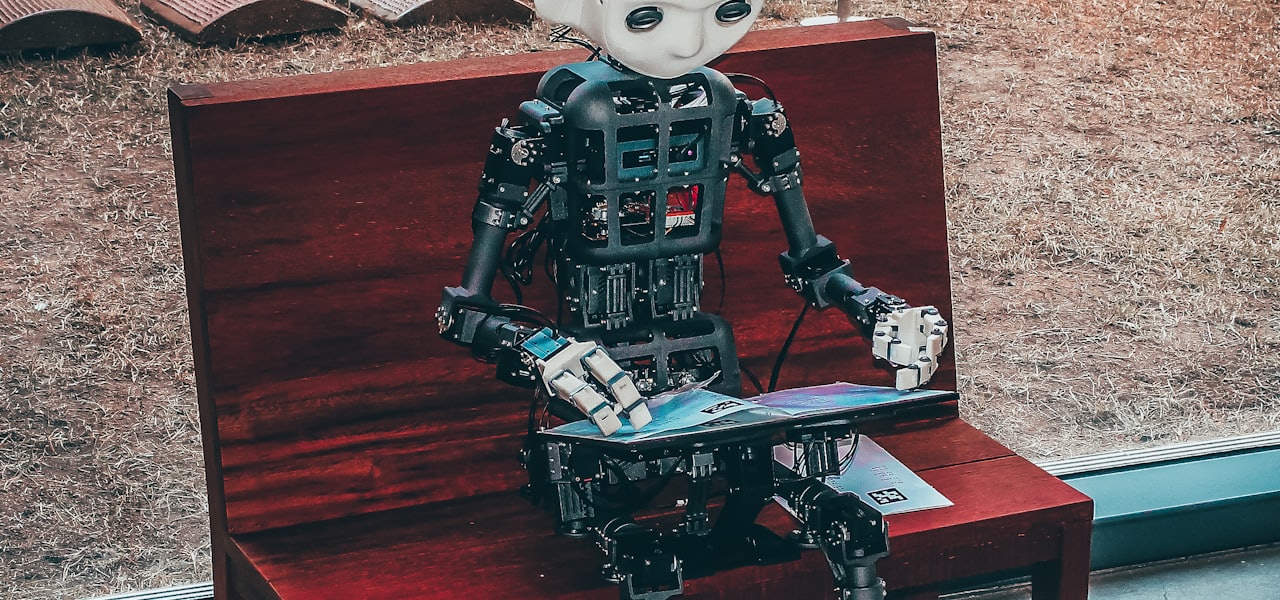
Open-source robotics is a branch of robotics where robots are developed with open-source hardware and free and open-source software, publicly sharing blueprints, schematics, and source code. It is thus closely related to the open design movement, the maker movement and open science. == Requirements == Open source robotics means that information about the hardware is easily discerned, so that others can easily rebuild it. In turn, this requires design to use only easily available standard subcomponents and tools, and for the build process to be documented in detail including a bill of materials and detailed ('Ikea style') step-by-step building and testing instructions. (A CAD file alone is not sufficient, as it does not show the steps for performing or testing the build). These requirements are standard to open source hardware in general, and are formalised by various licences, certifications, especially those defined by the peer-reviewed journals Journal of Open Hardware and HardwareX. Licensing requirements for software are the same as for any open source software. But in addition, for software components to be of practical use in real robot systems, they need to be compatible with other software, usually as defined by some robotics middleware community standard. == Hardware systems == Applications to date include: Robot arms, e.g. PARA or Thor Wheeled mobile robots. e.g. OpenScout Four-legged robots such as the Open Dynamic Robot Initiative UAV quadcopters (drones) such as Agilicious Humanoid robots, e.g. iCub, Berkeley Humanoid Lite Self-driving cars, e.g. OpenPodcar (→ Personal rapid transit) Submersible robots, eg. OpenFish Laboratory robotics such as chemical liquid handling Vertical farming Swarm robots, e.g. HeRoSwarm Domestic tasks: vacuum cleaning, floor washing and grass mowing Robot sports including robot combat and autonomous racing Education == Hardware subcomponents == Most open source hardware definitions allow non-open subcomponents to be used in modular design, as long as they are easily available. However many designs try to push openness down into as many subcomponents as possible, with the aim of ultimately reaching fully open designs. Open hardware manual-drive vehicles and their subcomponents, such as from Open Source Ecology, are often used as starting points and extended with automation systems. Open subcomponents can include open-source computing hardware as subcomponents, such as Arduino and RISC-V, as well as open source motors and drivers such as the Open Source Motor Controller and ODrive. Open hardware robotics interface boards can simplify interfacing between middleware software and physical hardware. == Software subcomponents == === Middleware === Robotics middleware is software which links multiple other software components together. In robotics, this specifically means real-time communication systems with standardized message passing protocols. The predominant open source middleware is ROS2, the robot operating system, now as version 2. Other alternatives include ROS1, YARP — used in the iCub, URBI, and Orca. Open source middleware is usually run on an open source operating system, especially the Ubuntu distribution of Linux. === Driver software === Most robot sensors and actuators require software drivers. There is little standardization of open source software at this level, because each hardware device is different. Creating open drivers for closed hardware is difficult as it requires both low level programming and reverse engineering. === Simulation software === Open source robotics simulators include Gazebo, MuJoCo and Webots. Open source 3D game engines such as Godot are also sometimes used as simulators, when equipped with suitable middleware interfaces. === Automation software === At the level of AI, many standard algorithms have open source software implementations, mostly in ROS2. Major components include: Machine vision systems such as the YOLO object detector. 3D photogrammetry Navigation including SLAM and planning such as nav2 Arm inverse kinematics such as moveIt2 == Community == The first signs of the increasing popularity of building and sharing robot designs were found with the maker culture community. What began with small competitions for remote operated vehicles (e.g. Robot combat), soon developed to the building of autonomous telepresence robots such as Sparky and then true robots (being able to take decisions themselves) as the Open Automaton Project. Several commercial companies now also produce kits for making simple robots. The community has adopted open source hardware licenses, certifications, and peer-reviewed publications, which check that source has been made correctly and permanently available under community definitions, and which validate that this has been done. These processes have become critically important due to many historical projects claiming to be open source but them reverting on the promise due to commercialisation or other pressures. As with other forms of open source hardware, the community continues to debate precise criteria for 'ease of build'. A common standard is that designs should be buildable by a technical university student, in a few days, using typical fablab tools, but definitions of all of these subterms can also be debated. Compared to other forms of open source hardware, open source robotics typically includes a large software element, so involves software as well as hardware engineers. Open source concepts are more established in open source software than hardware, so robotics is a field in which those concepts can be shared and transferred from software to hardware. While the community in open source robotics is multi-faceted with a wide range of backgrounds, a sizable sub-community uses the ROS middleware and meets at the ROSCon conferences to discuss development of ROS itself and automation components built on it.
Data definition specification
In computing, a data definition specification (DDS) is a guideline to ensure comprehensive and consistent data definition. It represents the attributes required to quantify data definition. A comprehensive data definition specification encompasses enterprise data, the hierarchy of data management, prescribed guidance enforcement and criteria to determine compliance. == Overview == A data definition specification may be developed for any organization or specialized field, improving the quality of its products through consistency and transparency. It eliminates redundancy (since all contributing areas are referencing the same specification) and provides standardization and degrees of compliance, making it easier and more efficient to create, modify, verify, analyze and share information across the enterprise. To understand how a data definition specification works in an enterprise, we must look at the elements of a DDS. Writing data definitions, defining business terms (or rules) in the context of a particular environment, provides structure for an organization's data architecture. In developing these definitions, the words used must be traceable to clearly defined data. A data definition specification may be used in the following activities: Business intelligence Business process modeling Business rules management Data analysis and modeling Information architecture Metadata modeling Data mastering Report generation == Criteria == A data definition specification requires data definitions to be: Atomic – singular, describing only one concept. Commonly used and ambiguous terms should be defined. While a term refers to one concept, several words may be used in a term: File – A concept identifiable with one word File extension – A concept identifiable with more than one word Traceable – Mapped to a specific data element. In business, a term may be traced to an entity (for example, a customer) or an attribute (such as a customer's name). A term may be a value in a data set (such as gender), or designate the data set itself. Traceability indicates relationships in the data hierarchy. Consistent - Used in a standard syntax; if used in a specific context, the context is noted Accurate - Precise, correct and unambiguous, stating what the term is and is not Clear - Readily understood by the reader Complete - With the term, its description and contextual references Concise - To avoid circular references == Applications == === Enterprise data === A data definition specification was produced by the Open Mobile Alliance to document charging data. The document, the centralized catalog of data elements defined for interfaces, specifies the mapping of these data elements to protocol fields in the interfaces. Created for the exchange of financial data, Market Data Definition Language (MDDL) is an XML specification designed to enable the interchange of information necessary to account, to analyze, and to trade financial instruments of the world's markets. It defines an XML-based interchange format and common data dictionary on the fields needed to describe: (1) financial instruments, (2) corporate events affecting value and tradability, and (3) market-related, economic and industrial indicators. The principal function of MDDL is to allow entities to exchange market data by standardizing formats and definitions. MDDL provides a common format for market data so that it can be efficiently passed from one processing system to another and provides a common understanding of market data content by standardizing terminology and by normalizing the relationships of various data elements to one another ... From the user perspective, the goal of MDDL is to enable users to integrate data from multiple sources by standardizing both the input feeds used for data warehousing (i.e., define what's being provided by vendors) and the output methods by which client applications request the data (i.e., ensure compatibility on how to get data in and out of applications)." === Clinical submissions === The Clinical Data Interchange Standards Consortium, a global, multidisciplinary, non-profit organization, has established standards to support the acquisition, exchange, submission and archiving of clinical research data and metadata. CDISC standards are vendor-neutral, platform-independent and freely available from the CDISC website. The Case Report Tabulation Data Definition Specification (define.xml) draft version 2.0, the oldest data definition specification, is part of the evolution from the 1999 FDA electronic submission (eSub) guidance and electronic Common Technical Document (eCTD) documents specifying that a document describing the content and structure of included data be included in a submission. Define.xml was developed to automate the review process by generating a machine-readable data-definition document. Define.xml has standardized submissions to the Food and Drug Administration, reducing review times from over two years to several months. === Archival data === A data definition specification is the foundation of metadata for scientific data archiving. The Metadata Encoding and Transmission Standard (METS) uses one principle of a DDS: consistent use of key terms to catalog digital objects for global use. The METS schema is a flexible mechanism for encoding descriptive, administrative and structural metadata for a digital library object and expressing complex links between metadata, and can provide a useful standard for the exchange of digital-library objects between repositories. A similar effort is underway to preserve complex data associated with video-game archiving. Preserving Virtual Worlds attempted to address archival-format deficiencies, citing the lack of suitable documentation for interactive fiction and games at the bit level: specifically, the absence of "representation information" needed to map raw bits into higher-level data constructs. Preserving Virtual Worlds 2 is a research project expanding on initial efforts in this field.